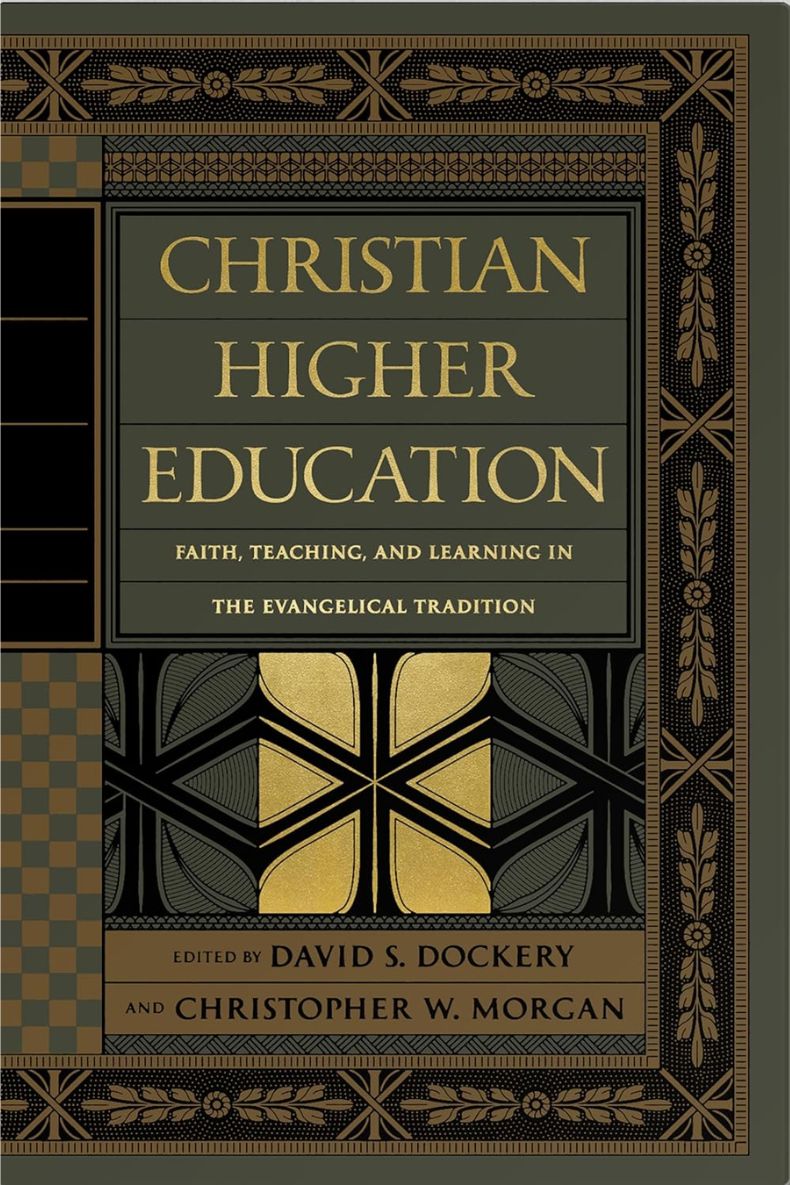
Christian Higher Education: Faith, Teaching, and Learning in the Evangelical Tradition, ed. David S. Dockery and Christopher W. Morgan. Wheaton, IL: Crossway, 2018. 576 pp. $50.00.
David S. Dockery is the president of Trinity International University, and Christopher W. Morgan is the dean and professor of theology at California Baptist University. Both educators are notable scholars and administrators within evangelicalism and thus bring insight and expertise to their task as editors of this impressive collection of essays. The volume comprises twenty-seven chapters covering a wide range of topics related to education. The twenty-nine contributors hail from a variety of institutions, although the majority have affiliation with Trinity at the undergraduate or graduate level (nearly two-thirds).
The book divides into three major parts. The first part develops the theological underpinnings for the task of Christian education. The essays here treat several key aspects of the theological basis for university or seminary teaching, including the authority of Scripture (Woodbridge), the proper methodology of biblical scholarship (Guthrie), and the historical backdrop of the ancient and modern contexts of Christian education (Grundlach). Dockery sets the trajectory by framing the ideal function and purpose of Christian education as one of building from the best of Christian tradition, grounding itself in the great confessional legacies, maintaining a vibrant connection to the church, sustaining a healthy student focus, and upholding rigorous standards of scholarship. The essays by Dockery, Finn, Woodbridge, and Guthrie are of particular value for their keen handling of their topics.
The second part examines the integration of faith, Scripture, and Christian tradition into the various disciplines of study in the modern university or seminary. Morgan sets the agenda for the section with his essay on Christian worldview. He uses the analogy of a compass to argue that the Christian worldview orients the various disciplines, signaling “true north” as one traverses difficult terrain. He relates the Christian worldview to education by outlining how the emphases of the former (e.g., God, humanity, creation, sin, the church) relate to the task of learning. Within the section several disciplines are integrated with the Christian worldview, including the humanities, the sciences, mathematics, social science, philosophy, the arts, education, and professional programs. The essays by Guthrie (“Faith and Learning”) and David and Chrystal Ho Pao (“The Importance of Research for Teaching and Learning”) are especially acute.
The third section seeks to apply the emphases of the former sections by fleshing out the practical implications of theology and worldview for education. The nine essays cover an array of topics, such as the proper place and function in education of catechesis (Kang), student life (Theonugrapha), culture (Watson), and church service (Cornman). The essays by Watson (“Faith, Ethics, and Culture”) and Ashford (“Missions, the Global Church, and Christian Higher Education”) are noteworthy.
The book has several strengths. Its treatment of the enterprise of Christian education is extensive and, in many places, insightful. For teachers engaging in the task of higher Christian education a number of essays will provide both a sharpened focus for the work and a prod of encouragement to pursue their vocation with courage, grace, and wisdom. The integration of the Christian worldview with what many would consider the more secular disciplines, such as mathematics or business, provides fresh perspectives on the sufficiency of Scripture and on the pressing need to submit all intellectual pursuits to the lordship of Christ.
There are a few weaknesses that also merit mention. First, many of the essays are repetitive, conveying similar information about the Christian worldview (e.g., the creation-fall-redemption-restoration paradigm), about the educational challenges presented by Generation Z, or about the best practices in instructional pedagogy. This shortcoming may have been eliminated by reducing the number of essays or honing the focus in certain areas, especially the third section. Second, a greater diversity of voices in Christian education would have added credibility and a more global perspective to the study. As mentioned above nearly two-thirds of the writers hold positions at Trinity, and certain chapters read like an advertisement for that institution (especially the essay by Jeffery). Teachers from smaller institutions or from the developing regions of the world would have added a valuable perspective on Christian education in the twenty-first century. In summary, the book makes a solid contribution to the field of Christian education. I would commend it to teachers who wish to deepen their understanding of the philosophy of Christian education and of the theological worldview that must govern the approach of Christian educators in these uncertain days now and in the future.